


South Florida’s Water Is Hard on Your Hull
If you keep your boat in the water year-round — or even just through the summer — you already know what happens without a fresh coat of antifouling paint. Barnacles, slime, and growth attach fast in warm South Florida water. Once it takes hold, it drags your speed down, hurts fuel economy, and can cause real damage to the gel coat underneath if you let it go long enough. The right bottom paint, applied at the right time, is one of the most cost-effective things you can do to protect your investment.
Hard Paint vs. Ablative: Which One Is Right for You?
The two main categories of antifouling paint work in fundamentally different ways. Hard paints release biocides gradually through a surface that doesn’t wear away. They’re well-suited for boats that sit still for extended periods and polish up nicely for speed. Ablative paints wear away slowly as the boat moves through the water — the more you run, the more paint is consumed and the more biocide is released at the surface. For boats that run regularly in South Florida, ablatives are often the better choice because they stay effective over time and don’t build up with repeated haul-outs.
Copper Content Matters in South Florida
South Florida’s water is warm year-round, which accelerates growth significantly compared to northern climates. For our conditions, you generally want a paint with higher copper content — 55% or above for boats kept in the water full time. Standard-grade paints designed for seasonal northern use often underperform down here. If you’ve been using the same bottom paint for years and still fighting growth, the copper content is usually the first thing to look at.
How Often Should You Haul and Recoat?
Most boats kept in South Florida marinas benefit from a haul-out and fresh bottom paint annually — typically timed for late spring before summer heat hits full force, or in fall ahead of the busy season. If your boat lives on a lift, you can sometimes extend that cycle, but running gear, trim tabs, and lower units still need attention. Boats on moorings or in slips that don’t come out of the water regularly tend to need more frequent service.
Prep Work Makes the Difference
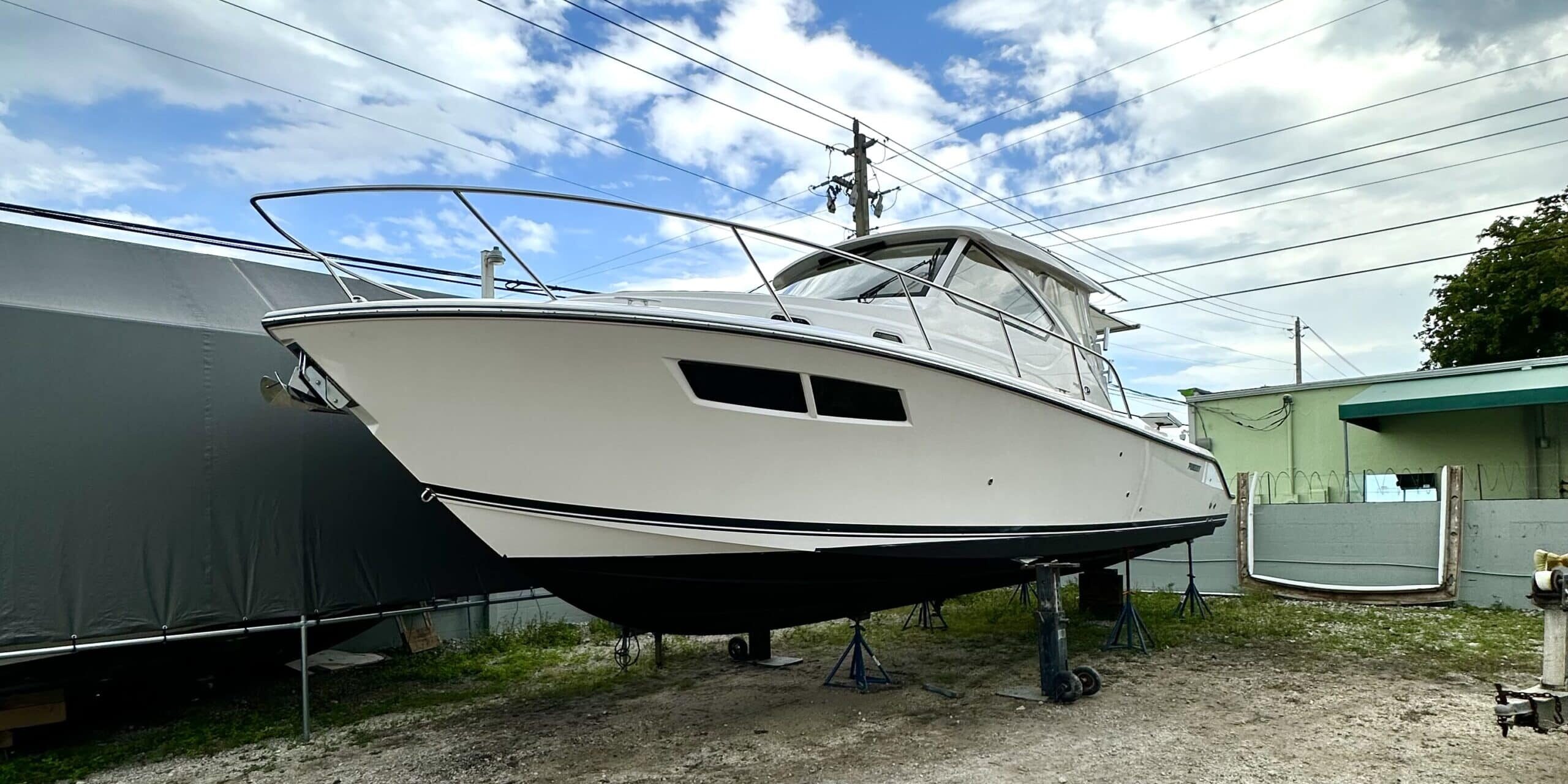
The best paint in the world won’t perform well over a poorly prepped surface. Before any fresh application, the hull needs to be pressure washed, sanded smooth, and fully dried. Any areas of delamination or damaged gel coat need to be repaired before painting. Skipping prep to save time almost always results in poor adhesion, early peeling, and a job that needs to be redone sooner than it should. Our team handles the full process — haul, pressure wash, prep, paint, and splash — so the job gets done right the first time.
Ready to Schedule Your Bottom Job?
Spring and early summer are our busiest time for bottom paint work, and haul-out slots fill up faster than most boat owners expect. If you’re planning to recoat before summer, now is the time to get on the schedule. We work with a range of premium antifouling products and can recommend the right formula for your hull type, how often you run, and where you keep the boat. Give us a call and we’ll get you set up before the season is fully underway.